








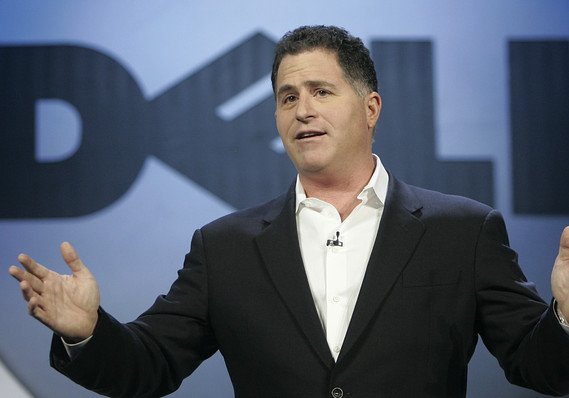
The personal computer revolution was defined by contrasting visions, but few rivalries encapsulate the tension between operational efficiency and design perfection like the story of Michael Dell and Steve Jobs. Both men were college dropouts who reshaped modern technology, yet their paths to building global empires could not have been more different. While one focused on perfecting the supply chain and making computing affordable, the other focused on creating seamless user experiences and beautiful hardware.
Michael Dell founded his company from a dorm room at the University of Texas at Austin in 1984. His core philosophy was built on a direct-to-consumer model where computers were assembled only after a customer placed an order. This strategy eliminated costly inventory risks and allowed Dell to offer highly customizable Windows PCs at competitive prices. His focus was entirely on operational efficiency, rapid assembly, and serving the practical needs of businesses and individual consumers.
Steve Jobs co-founded Apple in a garage in 1976 with a completely opposite philosophy. Jobs believed in vertical integration, meaning Apple had to control both the hardware and the operating system to deliver a complete product. To Jobs, a computer was not just a utilitarian tool or a commodity, but an extension of human creativity. He prioritized aesthetic beauty, intuitive user interface design, and premium build quality over low prices or custom modular configurations.
The Infamous Public Clash
The contrast in their business philosophies spilled into a public rivalry during the late 1990s. In 1997, Apple was facing severe financial distress and was near bankruptcy when Jobs returned to lead the company. During an industry conference, Michael Dell was asked what he would do to fix Apple if he were in charge. Dell famously responded that he would shut the company down and return the remaining cash to the shareholders. Jobs was deeply insulted by the comment and used it as motivation to rebuild Apple into a dominant market force.
Secret Negotiations Behind the Scenes
Behind the scenes, the two executives shared a complex history that included secret business discussions. Before their public dispute, Jobs had actually approached Dell about licensing Apple software. In the early 1990s, Jobs tried to convince Dell to run the NeXT operating system on Dell machines. Later, after returning to Apple, Jobs personally demonstrated a Dell computer running Mac OS X and proposed pre-installing it alongside Windows. Dell ultimately declined the offer due to licensing costs and financial terms that did not favor PC customers.
The Turnaround and Market Milestone
The rivalry reached a dramatic turning point nearly a decade later. By January 2006, Apple had completed a massive turnaround driven by the success of the iMac and the iPod. Apple surpassed Dell in total market capitalization for the first time in years. Jobs sent a company-wide email to Apple employees pointing out the milestone and noting that Dell had failed to predict the future accurately.
Competing Legacies in Technology
Ultimately, both Michael Dell and Steve Jobs achieved monumental success by sticking to their core strengths. Dell transformed the enterprise computing landscape and built a massive technology infrastructure giant through logistics and scale. Jobs transformed multiple industries, including personal computing, music, and mobile phones, through relentless innovation and product design. Their competing approaches proved that there are multiple ways to build world-changing technology companies.





One comment on “Michael Dell and Steve Jobs: The Rivalry of Operational Genius and Visionary Innovation”