








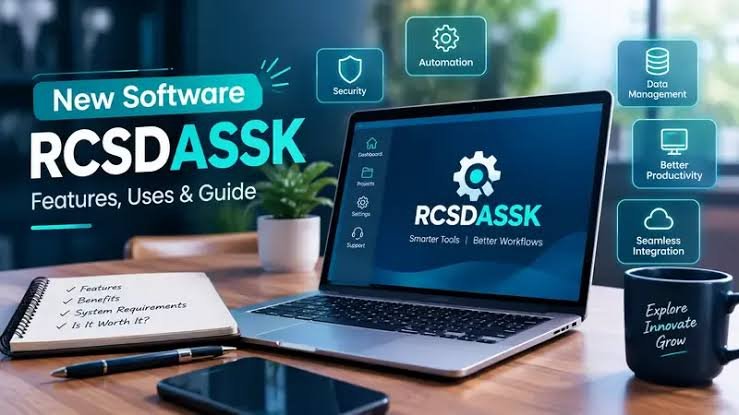
RCSDASSK Program: Complete Technical Guide & Troubleshooting Framework
The RCSDASSK program (Real-time Collaboration and Smart Data Analytics Software Kit) serves as a critical background framework for enterprise productivity, data access, and remote configuration management. When the application functions smoothly, it synchronizes analytics feeds, manages authorization tokens, and processes workflow triggers seamlessly. However, when runtime exceptions or system errors occur, identifying the exact root cause can feel challenging.
In this technical guide, we will break down the core system architecture of the RCSDASSK program, essential pre-flight verification steps, security conflicts, and a structured troubleshooting roadmap to resolve execution failures safely.
System Architecture & Core Capabilities
The RCSDASSK framework relies on two primary background execution engines that maintain continuous communication with host servers and local database drivers:
-
- Remote Configuration Service (RCS): Handles cloud-to-client settings synchronization, license validation, remote updates, and security token refresh routines.
- Data Access System Software Kernel (DASSK): A low-latency database processing kernel designed for pipeline execution, activity tracking, and real-time dashboard analytics.
Technical Verification and Environment Checks
Before making radical changes to your operating system or attempting advanced fixes, perform these essential environmental checks whenever the RCSDASSK program encounters an issue:
- Confirm the exact installed version.
- Check the published release notes.
- Verify the supported operating-system version.
- Compare dependency versions with the previous build.
- Check whether configuration formats changed.
- Review known issues associated with the release.
- Test the application with a clean user profile.
- Reproduce the failure on another compatible machine when possible.
Clean Reinstallation as an Advanced Fix
A clean reinstall should generally come after simpler diagnostics. Reinstalling immediately can hide the original cause and make it harder to determine whether the problem was configuration-related or caused by damaged program files.
Before uninstalling, back up important user data and configuration. Remove only files that the software’s documentation identifies as safe to remove.
After reinstalling, test the application before restoring custom settings. If it works in a clean state but fails after configuration data is restored, the configuration becomes a strong candidate for further investigation.
Security Software and Network Conflicts
Endpoint-security tools can sometimes interfere with legitimate applications like the RCSDASSK program by blocking executables, network connections, file operations, or scripts. This does not mean security software should simply be disabled.
Instead, inspect security logs for blocked activity and create narrowly scoped exceptions only when the application is trusted and the vendor documentation supports the configuration.
Network failures require a similar approach. Test DNS resolution, connectivity to required services, proxy settings, and firewall rules separately rather than assuming that an application error is automatically a server outage.
Preventing Future RCSDASSK Problems
A stable software environment is easier to maintain when changes are controlled. Avoid installing unrelated system modifications immediately before deploying a production application update.
Keep documented versions of the application, operating system, dependencies, drivers, and configuration. This creates a reproducible environment and makes future regressions easier to identify.
Practical Maintenance Habits:
- Maintain reliable backups.
- Record application and dependency versions.
- Apply updates through trusted distribution channels.
- Test major releases before production deployment.
- Monitor application logs regularly.
- Keep adequate disk capacity.
- Document configuration changes.
- Use separate testing and production environments.
- Avoid unverified third-party runtime files.
- Keep endpoint-security policies document.
When to Contact Technical Support
If the problem continues after environmental checks, log collection, dependency verification, and a clean installation, the issue may require vendor-level investigation.
When contacting support, provide the exact rcsdassk version, operating-system version, complete error message, reproduction steps, relevant logs, and a description of recent changes. Avoid sending passwords, API keys, private certificates, or other sensitive credentials in diagnostic files.
If the software has an official community forum or issue tracker, search for the exact error text before opening a new report. Existing reports may identify a known regression or compatibility problem.
Frequently Asked Questions (FAQs)
What does an RCSDASSK error mean?
There is insufficient publicly verifiable information to assign one universal meaning to every RCSDASSK error. The message could originate from the application, its dependencies, configuration, permissions, network environment, or operating system.
What should I do if RCSDASSK stopped working after an update?
Record the new version and error details first. Check release notes and dependencies, review logs, test with a clean configuration, and consider an official rollback only if the previous version is known to work and the vendor supports that process.
Should I download a missing RCSDASSK DLL from the internet?
No. Random DLL-download websites can introduce malware or incompatible binaries. Identify which dependency is actually missing and obtain the required runtime or component from its official software vendor.
Final Takeaway
Troubleshooting an rcsdassk problem is most effective when treated as a structured debugging exercise rather than a sequence of random fixes. Start with reproducibility, logs, dependencies, configuration, permissions, and environment checks before moving to reinstallation or rollback.
If an error rcsdassk message continues after these steps, the collected diagnostic information can significantly shorten the investigation by showing whether the failure originates in the application itself or in the surrounding software environment.





One comment on “RCSDASSK Program Guide: Features, Updates & Troubleshooting”